
Print is not dying, it is merely evolving.
Most of the general public who stumbles across our blog may find our discussions of mobile and digital technologies counterintuitive to what we ought to discuss: print. Yet what many don’t realize is how truly, for the first time, an analog technology (print) and a digital technology (mobile barcodes) join forces to create marketing campaigns to be reckoned with.
QR codes came out in 1994 as purely a means of industrial tracking, with the first QR code scanner and app used for marketing purposes released in 2010. With over half of US citizens carrying mini barcode scanners in their pocket, QR codes slowly entered the marketplace as the presage of making a printed piece more dynamic than just mere ink on paper. Since then, we have seen a barrage of various methods of connecting consumers to online content, including SnapTags, Augmented Reality, Near Field Communications, and finally, iPR™.
Digital natives, who are mostly members of Generation X and Y, tend to be the largest percentage of consumers with smartphones attached to their hips. They also have a greater understanding of how to use their mobile devices in reaction to ads they have seen, whether it be in-store ads, magazine ads, or poster ads.
Smart marketers knew that there had to be some way to link these printed ads to online communication channels (hence QR codes). A simple scan is generally faster than manually searching for the company online. For first time users, it can even be entertaining and provide a “wow” factor. These QR codes and subsequent technologies have paved the way for print interaction. More importantly, however, these tags and scans have begun to change how consumers view print.
While most QR code scanners tend to be affluent males between the ages of 18-34, adoption is still on the rise. This means that marketers and printers who use print media can no longer ignore the need to make print interactive. To survive, like all things in life, print must evolve. No one will ever deny that our world is a digital one, so why would printers deny this? When adoption of interactive print reaches maturity, consumers will not only seek after scanning the printed piece, they will come to expect it.
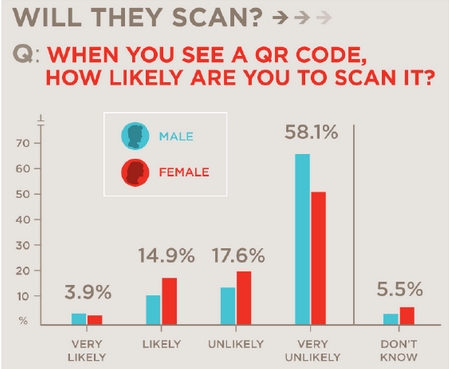
One company that anticipates this likely movement is Documobi, who claim that print is more than just text and words. Their technology, iPR™ or “intelligent Print Recognition” sees interactive print as a no-brainer. This means that in the future, smartphone users will scan any printed image possible, from dollar bills to a can of soda, to see where that image takes them online. What is unique about iPR™ is that a marketer can connect anything already printed, or even printed in the future, to the mobile-optimized web.
On top of this, the Documobi app can geo-target and recognize time of day. This means giving users the right information, at the right time, at the right place. Safely can one say that this is targeted marketing at its fullest!
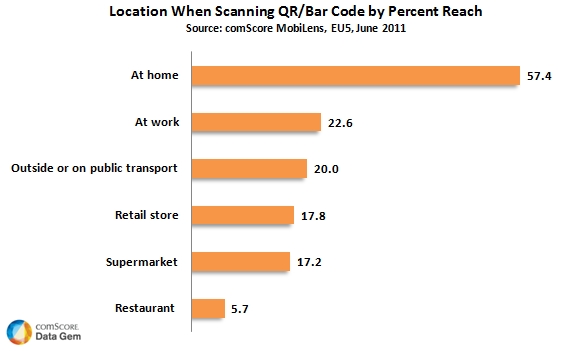
While it will be a few years before the concept of scanning just any printed piece becomes commonplace, the diffusion of technology is always surprising. By starting with QR codes and guiding customers in accepting print as interactive, marketers are on the road to making their marketing missions as impacting as possible.
Here is a quick little video from Documobi that showcases what iPR™ is capable of:
[youtube http://www.youtube.com/watch?v=jc7MjLutyH0?rel=0&w=560&h=315]
References:
http://www.qrcodesinmarketing.net/history-of-qr-codes.html
http://www.smartinsights.com/mobile-marketing/qr-code-marketing/qr-codes-location-demographic-statistics/
http://venturebeat.com/2011/08/12/qr-code-stats/
http://www.youtube.com/watch?v=jc7MjLutyH0&feature=related

Comment (1)